There is a difference between "growing older" and aging well. That difference is not a matter of luck; it is a matter of biology.
Over the past two decades, scientific research has identified a set of mechanisms that explain, at cellular and molecular level, why the body becomes less efficient over time. The scientific community calls these mechanisms the hallmarks of aging, the biological hallmarks of the aging process.
Understanding these mechanisms is the first step towards thinking about vitality and longevity in an informed way, without relying on vague promises or a single "miracle ingredient".
The 5 pillars of biological aging

1. Cellular energy and longevity
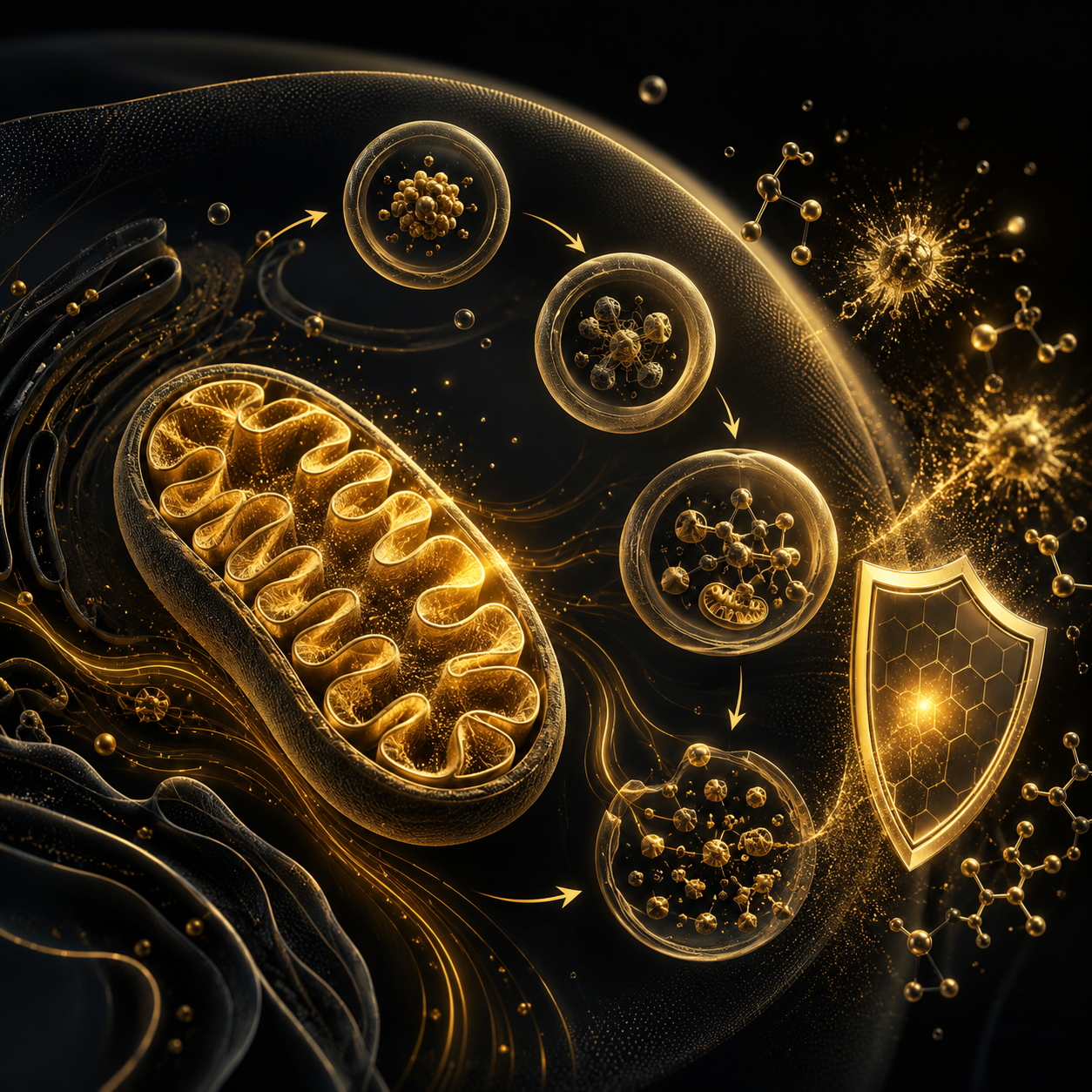
Our cells depend on efficient energy processes to function. Over time, this efficiency tends to decline, which can affect energy production at mitochondrial level. This is where biological pathways such as sirtuins (SIRT1/3/6) and AMPK come into play; both are now widely studied in longevity research.
2. Autophagy and cellular cleansing
Every day, our cells produce "waste" as part of their normal activity. Autophagy is the natural process through which the body recycles this waste, a kind of internal cleansing system. When this process becomes less efficient, waste tends to accumulate.
3. Senomorphic action and inflammatory balance
With age, a state of chronic low-grade inflammation, sometimes known as "inflammaging", commonly emerges. This process is associated with the accumulation of senescent cells: cells that have stopped dividing but remain metabolically active, releasing inflammatory signals into the surrounding tissue.
4. Epigenetic protection
Our DNA does not change throughout life, but the way genes are "read" and expressed does. This phenomenon is called epigenetics. Over time, changes can occur in this reading pattern, a process known as epigenetic drift, which is associated with the gradual loss of cells' functional identity.
5. Defence against oxidative stress
Continuous exposure to free radicals, resulting from normal metabolic processes and environmental factors, can cause cumulative structural damage to cells. The body's ability to neutralise this oxidative stress through pathways such as NRF2 is central to maintaining cellular function over time.
Why this matters
Understanding these 5 mechanisms changes the way we look at vitality throughout life. Instead of seeking isolated solutions or promises of an "immediate effect", science points towards a more comprehensive approach: supporting multiple biological processes simultaneously, consistently, day after day.
In the next articles, we will explore how nutrigenomics, the study of the interaction between nutrients and genes, is opening up new possibilities for supporting these mechanisms on a scientific basis.